Cannabinoids
Naturally occurring compounds produced by the cannabis plant. THC and CBD are two of the best known, but they are not the only ones.
Clear, approachable education for curious people. Start with the basics, learn the language, and build the confidence to ask better questions.
Cannabis conversations can become complicated quickly. This space is designed to make the first steps simpler—without judgment, pressure, or hype. We will keep adding new lessons as the library grows.
Cannabis is a plant that naturally produces cannabinoids, terpenes, and many other compounds. Different varieties and products can have very different profiles.
Effects are personal. Product type, serving amount, timing, and individual factors all matter. A label is the beginning of the conversation—not the whole story.
Naturally occurring compounds produced by the cannabis plant. THC and CBD are two of the best known, but they are not the only ones.
A cannabinoid best known for its intoxicating effects. The experience can vary with the amount, product, method of use, and individual.
A non-intoxicating cannabinoid found in cannabis and hemp products. Product quality and concentration can vary widely.
Aromatic compounds found throughout nature that help give plants their distinctive scents and flavors.
What cannabinoids are present?
How much is in one serving?
How is this product used?
When might effects begin and end?
Flower, concentrates, edibles, beverages, tinctures, and topicals can differ in onset, duration, potency, and experience. This guide offers a practical overview of the most common product forms.
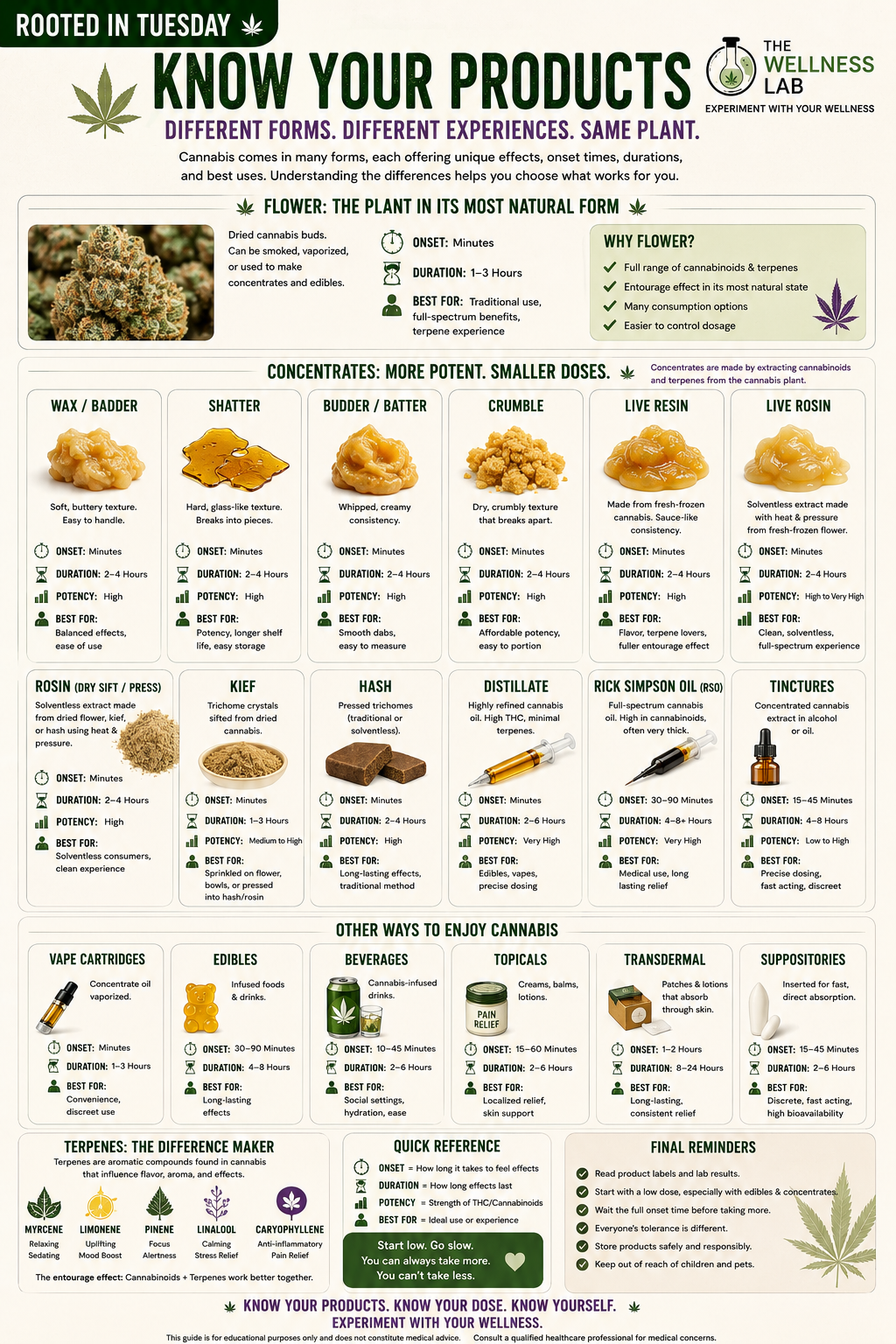
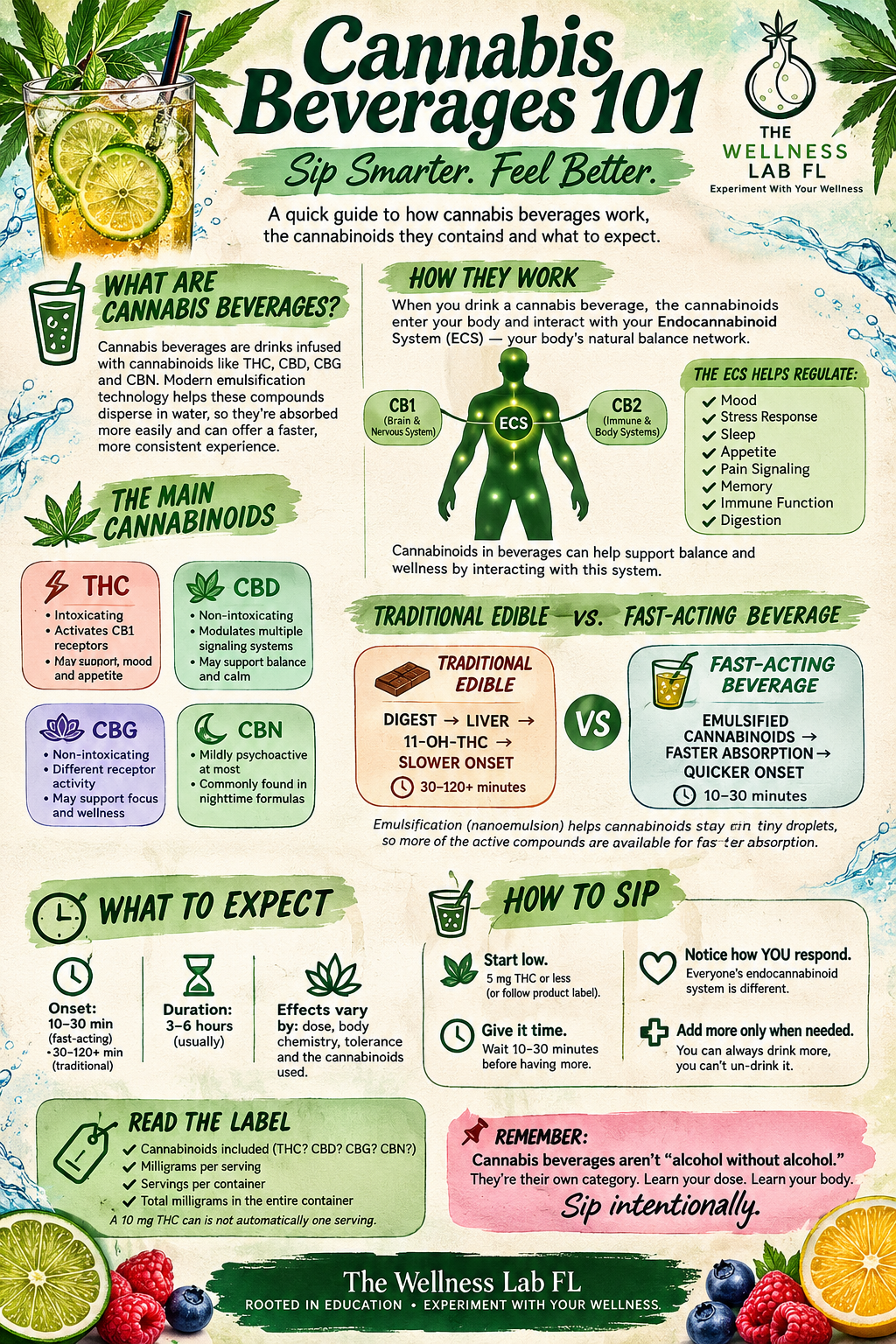
Different methods take effect on different timelines. Use this guide to compare common formats, understand what to expect, and make patient, mindful choices.
Cannabinoids can be made by the human body, produced by a plant, or created in a laboratory. Sharing a name does not make them identical in strength, effect, or risk.
Anandamide (AEA) and 2-AG
Internal signaling molecules that the body produces as needed. They are part of the endocannabinoid system.
THC, CBD, CBG, and CBC
Naturally occurring plant compounds. Cannabis produces many phytocannabinoids, and each can interact with the body differently.
A broad and varied category
Laboratory-made compounds designed to interact with cannabinoid signaling. They are not interchangeable with cannabis and may have very different risks.
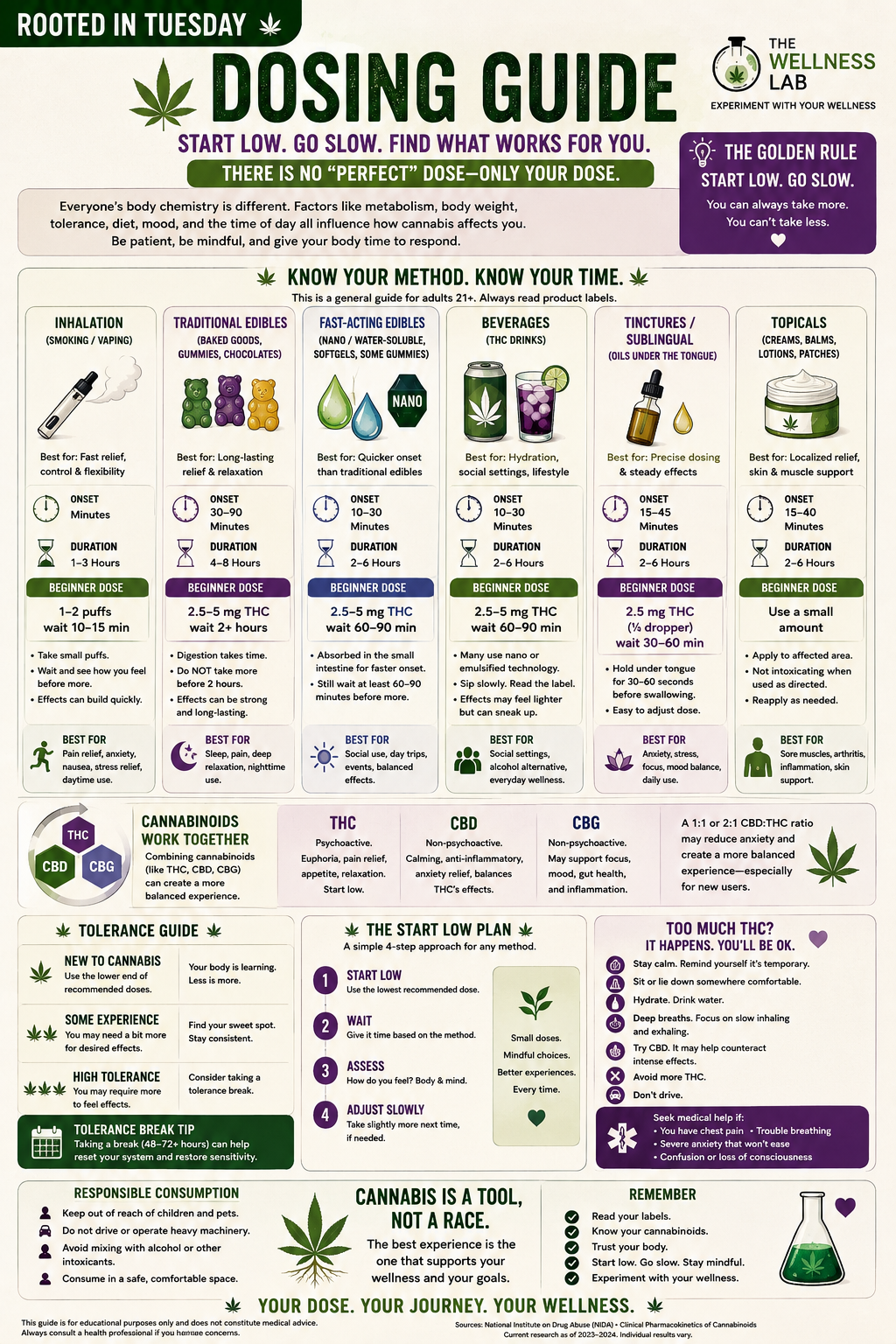
The endocannabinoid system, or ECS, is a body-wide signaling network. It exists whether or not someone uses cannabis and helps fine-tune communication across many neural and non-neural tissues.
Researchers study ECS involvement in nervous-system activity, movement, appetite and metabolism, memory, immune signaling, and other processes. That does not mean a cannabis product treats or corrects those functions.
Signals made by the body, including anandamide (AEA) and 2-AG. They are generally produced when and where they are needed.
CB1 is widely expressed in the nervous system and is also found elsewhere. CB2 is prominent in immune and peripheral tissues, with additional roles still being studied.
Specialized enzymes help make and break down endocannabinoids. FAAH and MAGL are two commonly discussed examples.
The body produces an endocannabinoid when needed.
The signal interacts with a receptor on or near a target cell.
The receptor helps influence cellular communication.
Enzymes break the signal down, helping end the message.
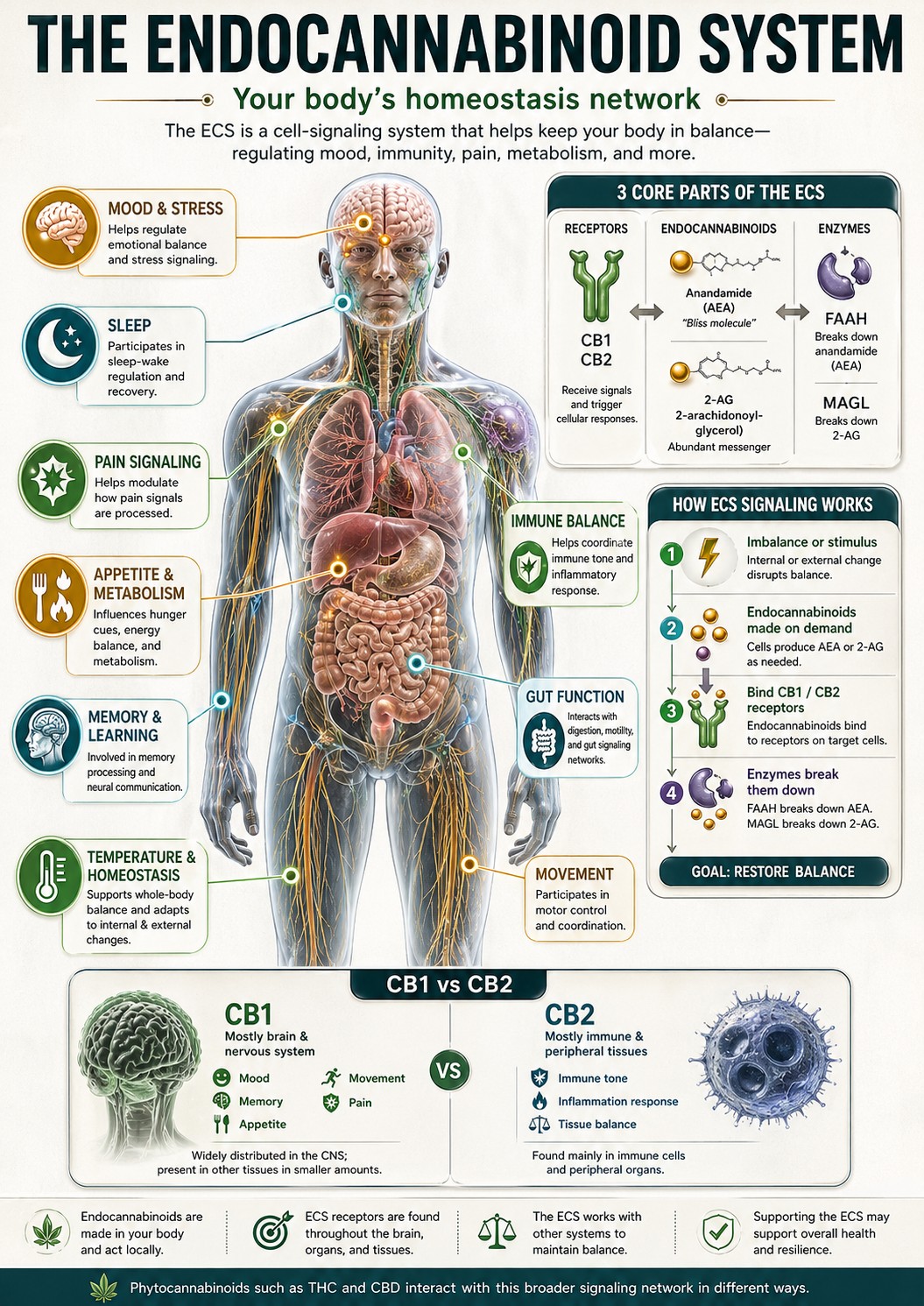
Beverages can have a different onset and experience than traditional edibles. Learn how they work, what to read on the label, and why waiting matters.
Hemp is cannabis grown and regulated within the rules that apply to hemp. It is not a completely separate plant family; the distinction is largely legal and agricultural.
The rules around hemp and finished products can change by location. Always check current labels and local requirements.
Hemp can support food, wellness, farming, fiber, materials, and research. What a hemp crop becomes depends on the variety, the part of the plant, and how it is grown and processed.
Hemp hearts, seed oil, and protein begin with the nutrient-rich seed; feed uses depend on current approvals.
Hemp can be part of crop rotations, regenerative agriculture, and research into useful farm applications.
Hemp flower and extracts can contain cannabinoids and terpenes used in a range of wellness products.
The stalk can become fiber and hurd for textiles, paper, building materials, bedding, and more.
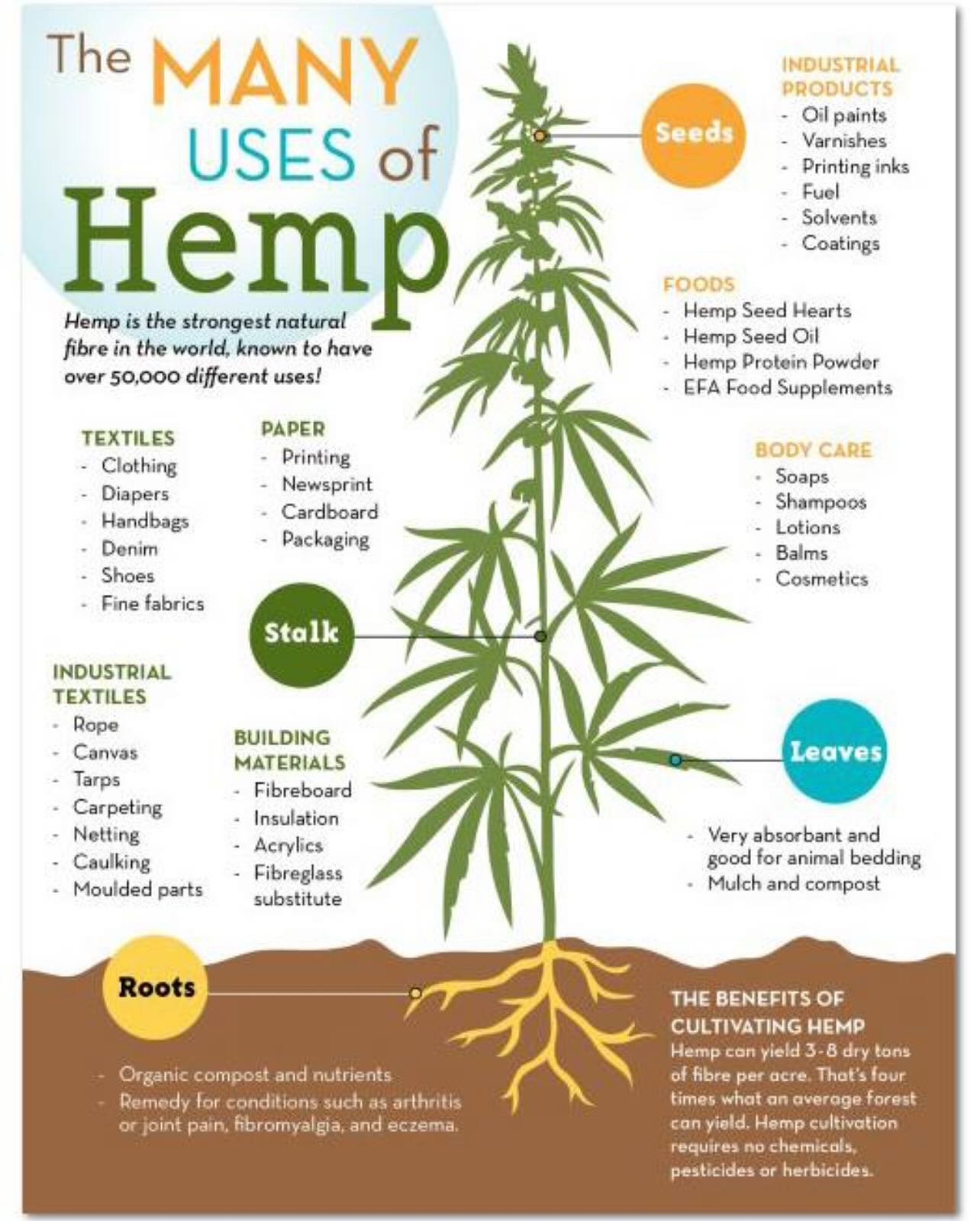
These visual guides connect the seed, stalk, leaves, flower, and roots with many of hemp's food, fiber, farming, wellness, and industrial applications.
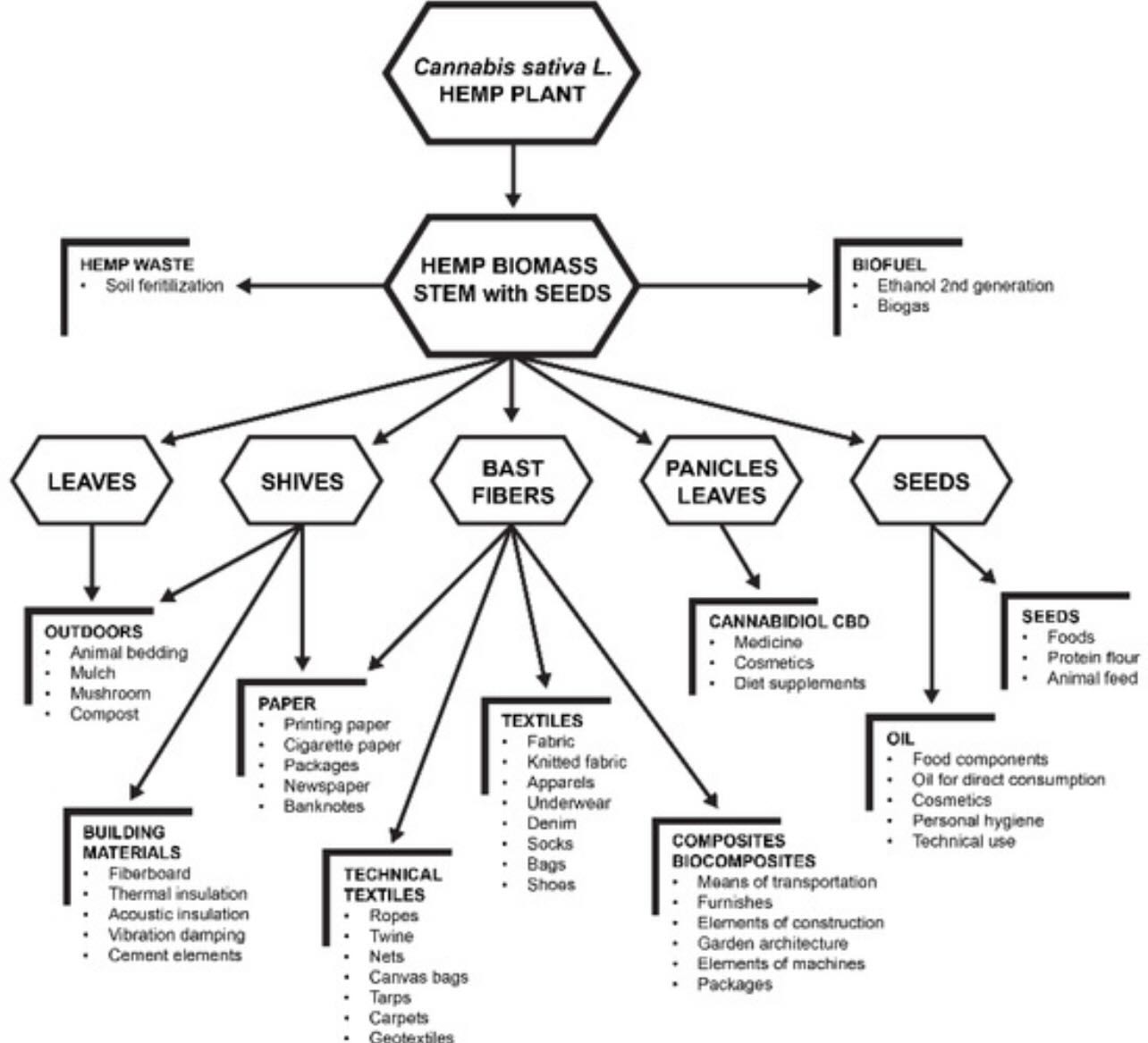
Hemp seed foods are one of the simplest ways to understand hemp as an agricultural crop. Hulled seed, protein powder, and seed oil can contribute protein, fats, and other nutrients as part of an overall diet.
Hemp seeds do not naturally contain THC or CBD. Trace amounts can be picked up when seeds contact other plant parts during harvesting and processing.
Often called hemp hearts. They provide plant protein and unsaturated fats, including omega-3 and omega-6 fatty acids.
Made from processed hemp seed and used as a plant-protein ingredient in smoothies, baking, snacks, and other foods.
Pressed from the seed and used in foods such as dressings, dips, sauces, and spreads. It is different from cannabinoid-rich hemp extract.
Sprinkle hemp hearts on oatmeal, yogurt, or salads
Blend hemp protein into a smoothie
Add hemp hearts to breads, muffins, or snack bites
Stir hemp hearts into soups, grains, or bowls
Use hemp seed oil in dressings, dips, and sauces
Hemp is not one raw material. The seed, outer stalk fiber, inner woody hurd, flower, and remaining biomass follow different processing paths and serve different markets.
Hemp has many established and emerging applications, but every use depends on the crop variety, processing equipment, product standards, regulation, and a viable market. Good education includes both the possibilities and the practical limits.
These first two lessons are the foundation. Future sections can go deeper while keeping the same plain-language approach.
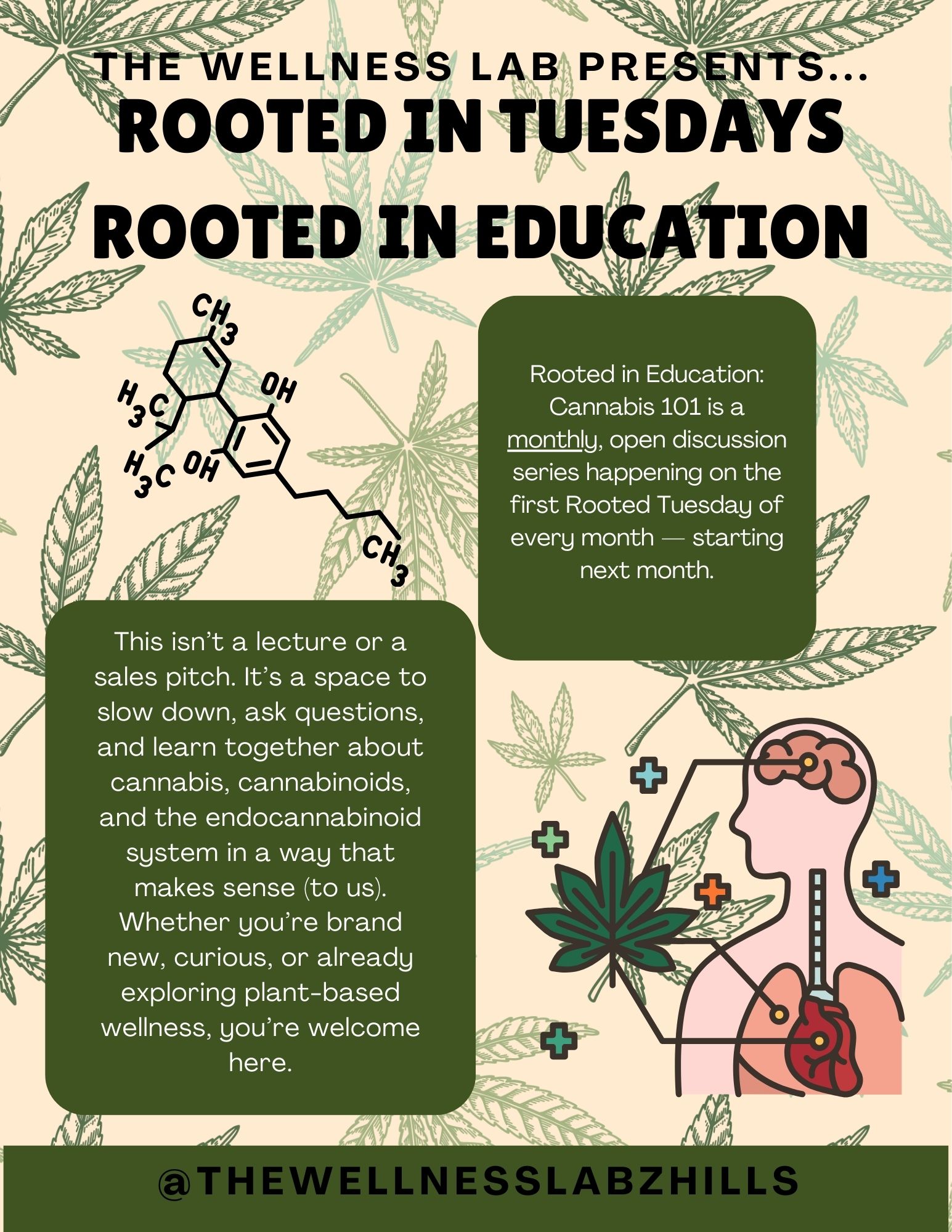
Rooted in Education is our welcoming Cannabis 101 conversation at The Wellness Lab. No lecture, no sales pitch—just a place to ask, listen, and learn together.
Educational information only. This page is not medical or legal advice and is not a substitute for guidance from a qualified professional.
This site contains information about cannabis, hemp, and hemp-derived products. By entering, you confirm you are 21 years of age or older.
We'll remember this on this device for 24 hours.